Dental Crown
A crown is generally used to repair and protect an existing tooth that has been weakened, fractured, heavily restored, or treated with root canal therapy.

Damaged and missing teeth can affect your comfort, appearance, and ability to chew. At Aldershot Village Dental, we provide custom dental crowns and bridges in Aldershot, Burlington, to help restore the strength, shape, and function of your smile.
A dental crown covers and protects a damaged or weakened tooth. A dental bridge replaces one or more missing teeth using an artificial tooth supported by neighbouring teeth, dental implants, or another treatment design recommended by your dentist. Crowns and bridges are fixed restorations, which means they are secured in place and are not removed for daily cleaning.
Our dental team will examine your teeth, gums, bite, and existing dental work before recommending treatment. Your restoration will be planned around your oral health needs, the location of the affected tooth, and your long-term treatment goals.
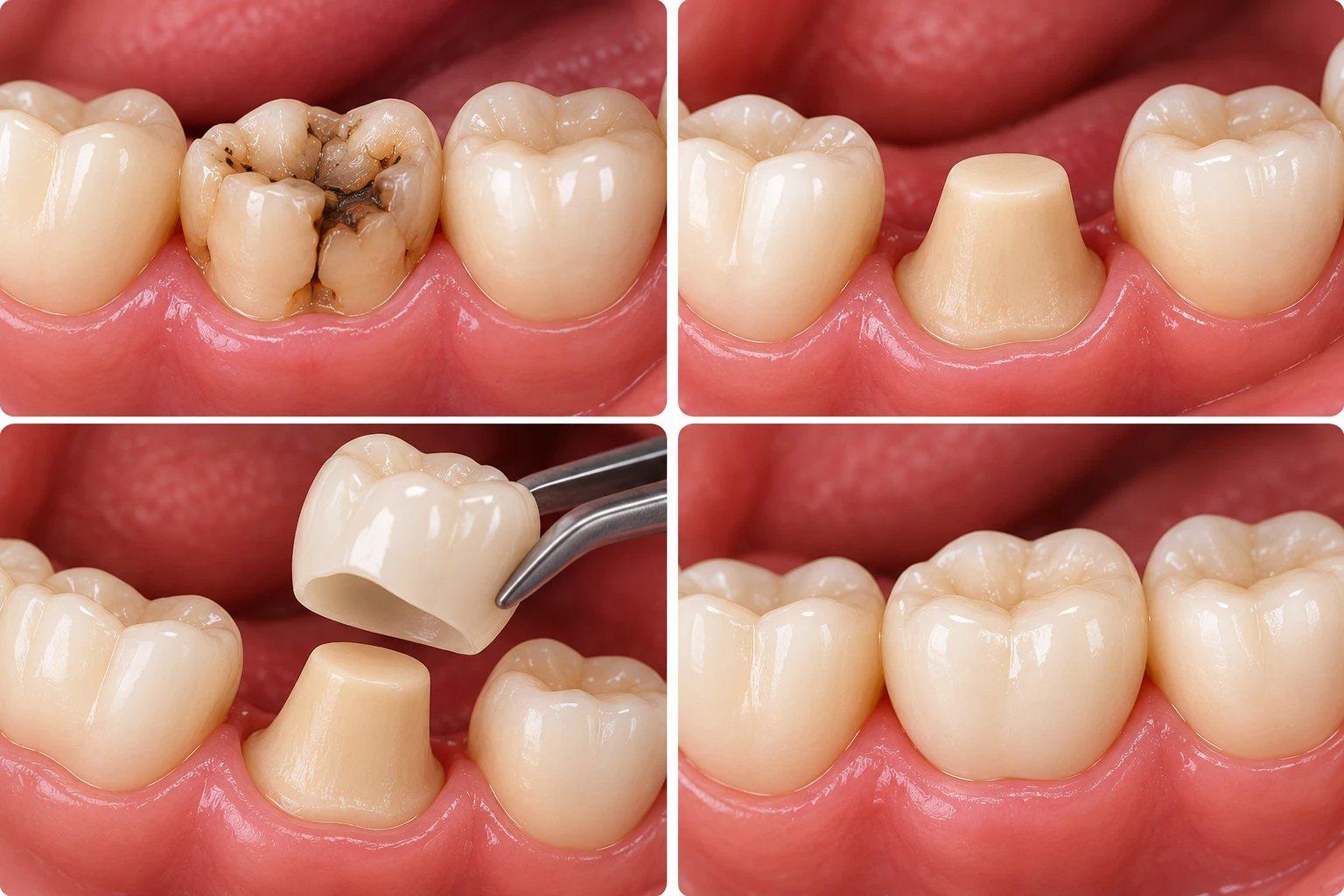
A dental crown is a custom-made covering placed over the visible portion of a damaged or weakened tooth. It is designed to restore the tooth’s shape, size, strength, and appearance.
Depending on your needs, a crown may be recommended to:
Crowns can be made from different dental materials, including ceramic, porcelain-based, metal, or a combination of materials. The appropriate option depends on the tooth’s location, the amount of biting pressure it receives, aesthetic considerations, and your dentist’s clinical assessment.
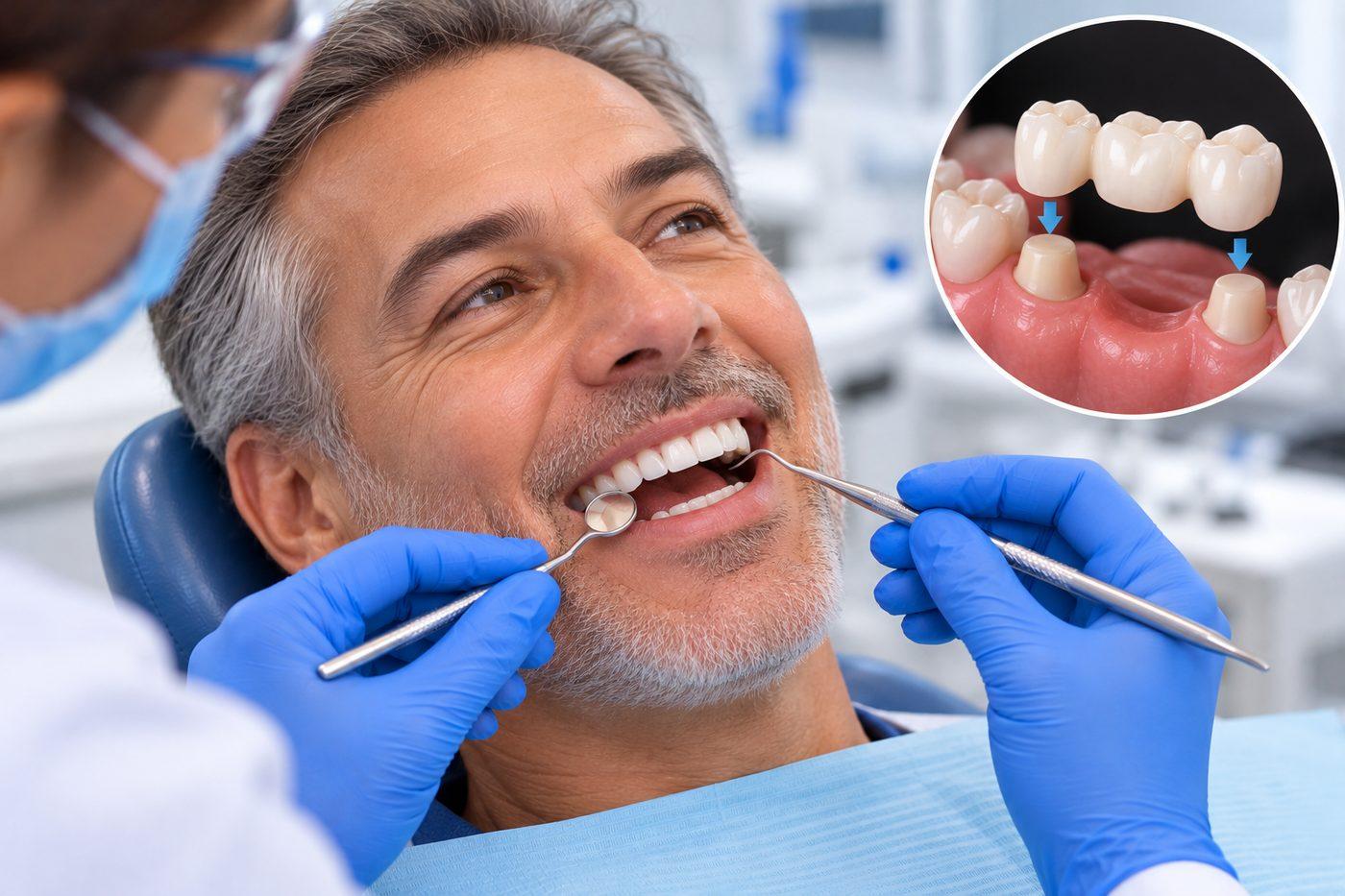
A dental bridge is a fixed restoration used to replace one or more missing teeth. It contains an artificial replacement tooth, known as a pontic, that fills the open space. The bridge is typically supported by crowns placed on neighbouring teeth or, in some situations, by dental implants.
Replacing a missing tooth may help:
Not every missing tooth should be treated in the same way. Your dentist will evaluate the health of the neighbouring teeth, gums, supporting bone, and bite before determining whether a bridge, dental implant, partial denture, or another option may be appropriate.
Although crowns and bridges are both fixed dental restorations, they address different concerns.
A crown is generally used to repair and protect an existing tooth that has been weakened, fractured, heavily restored, or treated with root canal therapy.
A bridge is used to replace a missing tooth or multiple adjacent teeth. It spans the open space and is supported by teeth or implants on either side of the gap.
A clinical examination and appropriate dental imaging are needed to determine which option is suitable for your oral health.
Your Aldershot dentist may recommend a crown when there is not enough healthy tooth structure remaining for a regular filling to provide reliable support.
Common reasons for receiving a crown include:
A crown may cover and reinforce a tooth that has been weakened by a crack, fracture, dental injury, or extensive wear.
Teeth with large fillings may have less natural structure remaining. A crown may help protect the weakened tooth when replacing the filling alone is not considered sufficient.
After decay is removed, a crown may be recommended when substantial tooth structure has been lost.
A tooth that has undergone root canal therapy may require a crown to protect the remaining tooth structure, particularly when the tooth is exposed to significant chewing pressure.
In selected cases, a crown may be considered to improve the shape, proportion, or colour of a tooth. More conservative cosmetic treatments may also be explored when clinically appropriate.
A dental bridge may be considered when one or more teeth are missing, and the surrounding teeth and gums can adequately support the restoration.
A bridge may help address:
Replacing a missing tooth may help maintain the spacing and alignment of the remaining teeth. However, successful treatment also depends on healthy supporting teeth and gums.
When appropriately planned and maintained, crowns and bridges may provide several functional and cosmetic benefits.
Crowns can rebuild damaged teeth, while bridges can replace missing teeth. These restorations may make biting and chewing more comfortable.
A crown surrounds the visible portion of a compromised tooth and may reduce the risk of additional damage.
Crowns and bridges can be designed to complement the colour, shape, and proportions of nearby teeth.
Replacing a missing tooth may help prevent nearby teeth from moving into the open space and disrupting the alignment of your bite.
Unlike removable partial dentures, conventional crowns and bridges remain secured in the mouth during normal daily activities.
The treatment process varies based on the type of restoration required, the health of the supporting teeth, and whether additional care is needed.
Your dentist will examine your teeth, gums, bite, and existing restorations. Dental X-rays or other diagnostic records may be recommended to assess the tooth roots and supporting bone.
Your dentist will explain the available options, expected benefits, material choices, limitations, and possible alternatives before treatment begins.
For a crown, the affected tooth is carefully shaped to create space for the restoration.
For a conventional bridge, the supporting teeth on either side of the gap are usually prepared to hold the crowns that anchor the replacement tooth.
Impressions or digital records are obtained to help create a restoration that fits your tooth and bite. A shade is selected to coordinate with the surrounding teeth when a tooth-coloured material is being used.
A temporary crown or bridge may be placed while the permanent restoration is being made. This helps protect the prepared teeth and maintain their appearance and function between appointments.
At the placement appointment, your dentist will evaluate the restoration’s fit, bite, shape, and appearance. Once the fit is confirmed, the crown or bridge is secured in place. Conventional crown and bridge treatment commonly requires more than one appointment, although the exact timeline depends on the individual case.
Crowns and bridges still require consistent oral hygiene. Although the restorative material cannot develop a cavity, decay can occur along the edge of a crown or bridge where it meets the natural tooth.
To care for your restoration:
Good oral hygiene is especially important around a bridge because the supporting teeth and gums help maintain the stability of the restoration.
The lifespan of a crown or bridge varies from person to person. It can be affected by:
No dental restoration can be guaranteed to last for a specific number of years. Routine dental care allows your dentist to monitor the restoration and identify concerns before they become more extensive.
The most appropriate treatment depends on the condition of the affected tooth, the number of missing teeth, gum and bone health, and your preferences.
A dental crown may be appropriate when an existing tooth can be repaired and protected.
A dental bridge may be considered when a tooth is missing and the surrounding teeth can support a fixed restoration.
A dental implant may replace a missing tooth without using the neighbouring natural teeth as bridge supports. Implant treatment requires sufficient bone and healthy gum tissue and involves a different treatment process.
A removable partial denture may replace one or more missing teeth and can be removed for cleaning.
Your dentist can explain the advantages, limitations, costs, and expected maintenance associated with each option.

Conveniently located for families across Halton Region, Aldershot Village Dental provides personalized restorative care for patients in Aldershot, downtown Burlington, and surrounding Waterdown communities. Whether you are commuting along the Plains Road East corridor or living near Lasalle Park, our clinic offers accessible, tailored scheduling for your restorative appointments.
When planning a crown or bridge, our focus is on:
Every patient and every tooth are different. A consultation allows our dental team to determine whether a crown, bridge, implant, filling, partial denture, or another treatment is appropriate for you.
If you have a broken, weakened, heavily filled, or missing tooth, a dental crown or bridge may help restore your smile and dental function.
Contact Aldershot Village Dental to schedule a consultation for dental crowns and bridges in Aldershot, Burlington. Our dental team will examine the affected area, discuss your treatment options, and help you make an informed decision about your oral health.
Local anesthetic is commonly used when preparing a tooth for a crown or bridge. This helps minimize discomfort during treatment. Some temporary sensitivity or tenderness may occur afterward. Contact your dentist if discomfort is severe, persists, or becomes worse.
Traditional crown and bridge treatment commonly involves at least two appointments. The first appointment may include tooth preparation, impressions, shade selection, and placement of a temporary restoration. The completed crown or bridge is evaluated and secured at a later appointment. The number and length of visits vary depending on the treatment.
A crown may restore a broken tooth when enough healthy tooth structure remains to support the restoration. If the fracture extends deeply below the gumline or affects the root, another treatment may be necessary.
A crown is frequently recommended after root canal treatment, particularly for back teeth that receive substantial chewing pressure. The recommendation depends on the location of the tooth, the amount of remaining structure, and your dentist’s assessment.
A bridge may replace one or more adjacent missing teeth. The feasibility of treatment depends on the length of the gap and the health of the supporting teeth, gums, and bone.
Yes. Decay can develop where the restoration meets the natural tooth. Daily brushing, flossing, cleaning beneath a bridge, and regular dental examinations can help protect the supporting teeth.
You can clean underneath a bridge using a floss threader, bridge floss, interdental brush, or another tool recommended by your dental hygienist. Daily cleaning helps remove plaque and food from around the artificial tooth and supporting teeth.
Neither treatment is best for every patient. A bridge is a fixed option supported by neighbouring teeth, while an implant is supported by a fixture placed in the jawbone. Treatment recommendations depend on oral health, supporting bone, neighbouring teeth, healing considerations, cost, and patient preferences.
Do not attempt to glue it back into place. Keep the restoration if it comes out, avoid chewing on the affected area, and contact your dental office promptly. The tooth and restoration should be evaluated to determine why it became loose.
Some dental insurance plans provide partial coverage for crowns or bridges when treatment meets the plan’s eligibility requirements. Coverage, deductibles, annual maximums, frequency limitations, and preauthorization rules vary. Ask the dental office for a treatment estimate that you can review with your insurance provider.
The cost depends on the type of restoration, material selected, number of teeth involved, complexity of treatment, and whether additional procedures are required. An examination is needed before an accurate treatment estimate can be provided.